
Effective Strategies for Software Development Estimation: A Comprehensive Guide
TABLE OF CONTENTS
Share on Social Media
Related Blogs

13 Essential Backup Guidelines and Data Loss Prevention Techniques for Maximum Safety
Read More: 13 Essential Backup Guidelines and Data Loss Prevention Techniques for Maximum Safety
How to implement ABCDE method for time management
Read More: How to implement ABCDE method for time management
5 Useful JavaScript tips and tricks and best practices
Read More: 5 Useful JavaScript tips and tricks and best practices
Unlock the Power of Automation: Explore Selenium with BDD Framework (Cucumber) for Efficient Testing
Read More: Unlock the Power of Automation: Explore Selenium with BDD Framework (Cucumber) for Efficient Testing
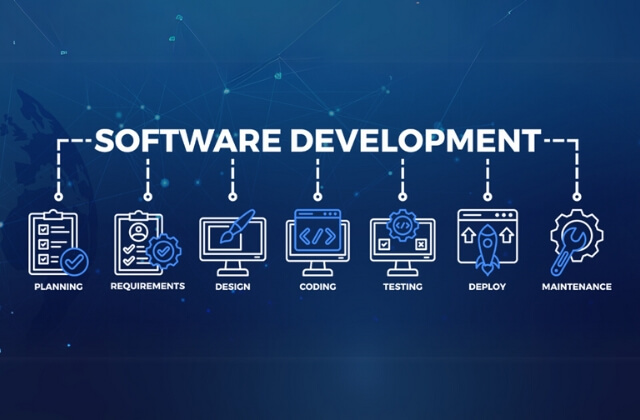
Effective estimation is used for project planning, resource allocation, and successful delivery. In this comprehensive guide, we’ll explore effective strategies for software development estimation, providing insights and tips to enhance estimation accuracy and project success.
Components of A Well-Structured Project Estimate
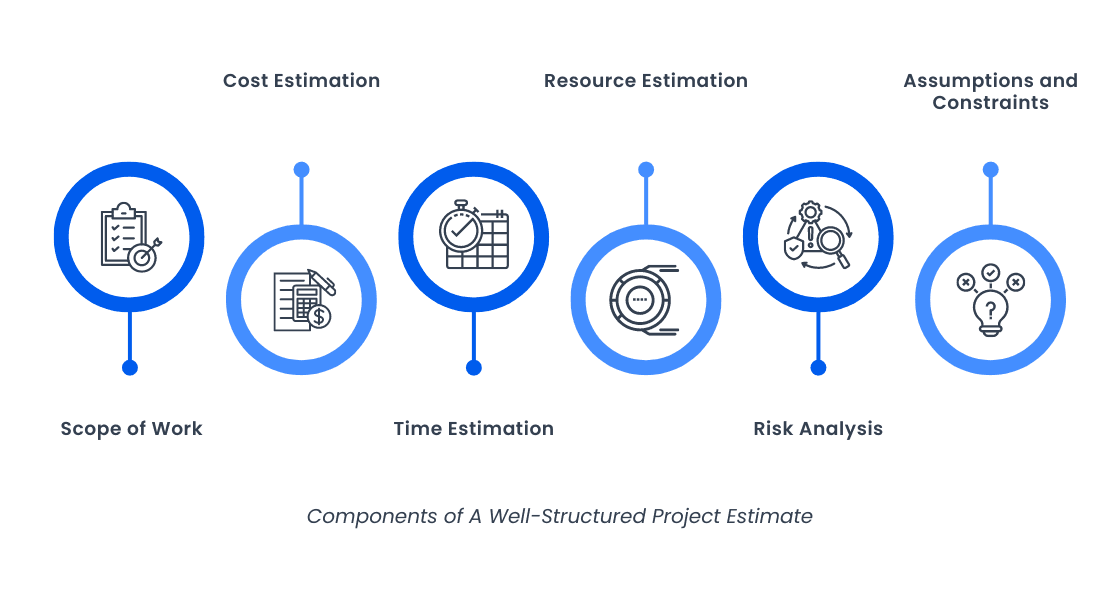
- Scope of Work encompasses a detailed description of the project’s deliverables. It should outline the functionalities, features, and requirements of the software.
- Cost Estimation refers to the financial resources required to complete the project. It should include staffing, technology, infrastructure, and other expenses.
- Time Estimation involves predicting the project’s duration, a key aspect of software development estimation. It should cover all stages of the software development life cycle.
- Resource Estimation pertains to the human resources, hardware, and software needed for the project’s execution.
- Risk Analysis includes identifying potential challenges or risks that could impact the project’s timeline or cost and the strategies to mitigate them.
- Assumptions and Constraints enumerate any assumptions made during the estimation process and any constraints that could affect the project’s execution.
Good & Bad Estimation in A Software Development Project
Good estimation involves accurately predicting project outcomes based on realistic assumptions, reliable data, and informed judgments. It helps in effective project planning, resource allocation, and risk management. Bad estimation, on the other hand, results from inaccurate data, incomplete requirements, overconfidence, or lack of expertise, leading to project delays, and client dissatisfaction.
Resource Allocation & Work Allocation
Resource allocation involves assigning available resources (e.g., team members, equipment) to specific tasks or activities based on project requirements and constraints. Effective resource allocation ensures that resources are utilized efficiently and project objectives are met within budget and schedule constraints. Work allocation involves distributing tasks and responsibilities among team members based on their skills, expertise, and availability, ensuring a balanced workload and optimal productivity.
Here are a few points which are important to consider:
- Internal team collaboration increases productivity
- Collaborating with external stakeholders increases innovation
- Strong team leadership
- Clear goals and purpose
- Standardized operating procedures
- Diversity
- Bonding time
- Transparency
- Inspection
Effective management, estimation, planning, and resource allocation can drastically influence your project’s flow.
Work Breakdown Structure (WBS)
A Work Breakdown Structure (WBS) divides a project into observable and manageable deliverables. It will demonstrate to the client that progress is being made while not being pressured to deliver the whole project at once. It also allows for more precise predictions since it is easier to predict how long a single task would take than a project with several small tasks.
A WBS can divide a ten-month project into ten one-month projects, making it much more manageable and easy for analysis.
When working on a project as a whole, teams may stick to their results, even if they are unusable. This will only waste time because it will take too long to halt and restart their development.
Activity-Based Estimation
Activity-based estimation involves breaking down a project into individual activities or tasks and estimating the effort required for each activity.Activity-based estimation provides detailed insights into individual project activities, allowing for more detailed planning and resource allocation.
Get the expert advice to grow your business digitally
Book a free consultationTask/Deliverables Based Estimation
Task/deliverables-based estimation involves organizing project tasks or deliverables to meet project deadlines effectively.
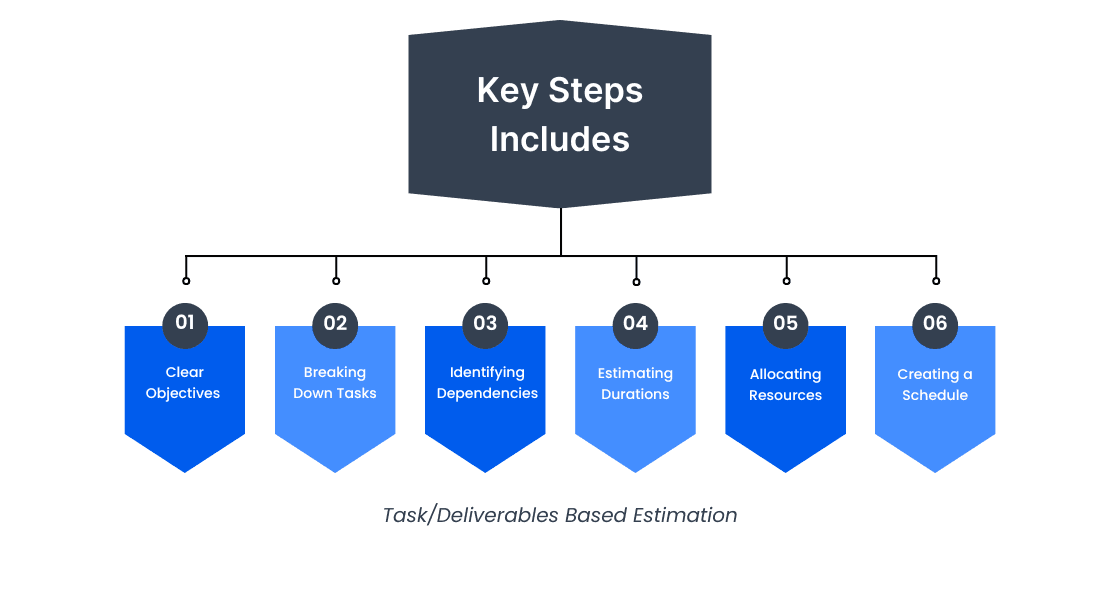
Regularly monitoring progress ensures that tasks are completed on time and in line with project goals.
How to Confirm if That Project Estimation is Genuine?
Estimation is crucial for a project’s success. There are some points which are confirming estimation is genuine:
- 1. Data Requirements are done properly and cover all requirements given by stack holder.Verify that all stakeholders have provided clear and complete requirements, including functionality, features, and performance expectations.
- 2. Analyze past project metrics such as effort, duration, and resource utilization to validate the accuracy of the current estimation.
- 3. Monitor the project’s progress against the estimation over time to see if they align.
- 4. Assess how variations in key factors, such as scope, resources, and assumptions, impact the overall estimation’s reliability.
- 5. Consult experienced professionals within the industry or organization to review and validate the estimation.
Conclusion
Effective project management relies on thorough planning, resource allocation, and risk assessment. By considering factors like scope, cost, time, resources, and potential risks, project managers can create robust estimates. Techniques such as work breakdown structures and activity-based estimation enhance accuracy, while analyzing past metrics and seeking expert validation validate estimations. With diligent monitoring and sensitivity analysis, organizations ensure the genuineness of estimates, fostering improved project outcomes and overall efficiency.
Share on Social Media
Related Blogs

Top 10 Cyber Security for SaaS Applications Practices: A Guide for 2025
Read More: Top 10 Cyber Security for SaaS Applications Practices: A Guide for 2025
Importance of UI/UX to Build the Best Website Design for Your Business
Read More: Importance of UI/UX to Build the Best Website Design for Your Business
What is the behavior of Scope in AngularJS Directives?
Read More: What is the behavior of Scope in AngularJS Directives?
Step-by-Step Guide to Using Azure Key Vault Secrets as Variables in Release Pipeline
Read More: Step-by-Step Guide to Using Azure Key Vault Secrets as Variables in Release PipelineStay ahead of the curve
Get the latest insights, tutorials, and industry news delivered straight to your
inbox. Join 10,000+ developers and tech leaders.